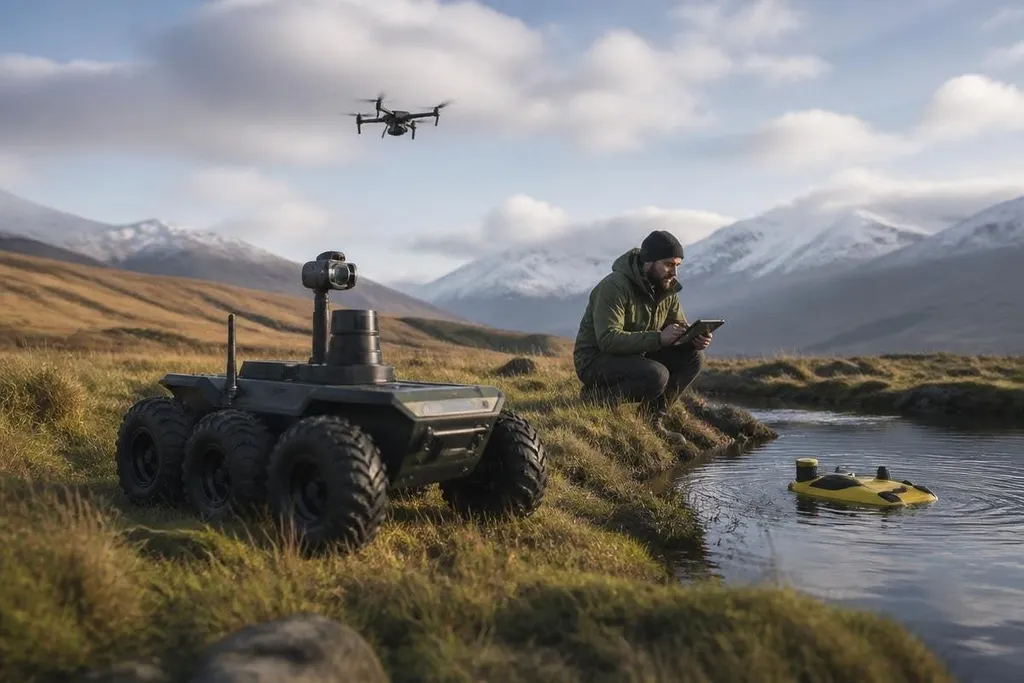
A wildlife robot can collect images, sound, or animal movement data without sending a person into rough terrain. The business opportunity starts when that data helps a paying customer make a decision, such as where to protect habitat or when to inspect a forest.
- Field data: cameras, microphones, and sensors can work where visits are costly or risky.
- Paying customers: parks, research teams, forestry firms, farms, and insurers may need different services.
- Main test: the data must arrive in a form that changes a plan, record, or budget.
The work a wildlife robot can do
A ground robot can carry cameras through grassland, woodland, or wet ground. A drone can survey an area from above, while an underwater vehicle can record reefs, rivers, or lakebeds. These machines gather data from places that are hard to check by foot or boat.
The hardware is only the first sale. A customer may also need a sensor package, a charging plan, field repair, data storage, and a report that a non-engineer can read.
That creates room for companies that sell a complete field service instead of a machine on its own. Acoustic sensing offers another route, because microphones can record animal calls, chainsaws, vehicle noise, or changes in a site’s sound pattern.
The business value comes from sorting those recordings and flagging a useful event, not from filling a hard drive with audio.
How the money could work
Wildlife robotics can support several types of contracts. A customer might buy the robot and run field work with its own staff, or pay a supplier to gather data and return a report for a set fee.
Other contracts can charge for repeated access to processed images, sound, or maps. A supplier may also handle repairs, software updates, batteries, and sensor swaps, while research groups or conservation bodies may pay for a defined survey with a fixed start and end.
A hardware sale can bring in money sooner, but field service may keep the supplier close to the customer’s real problem. That contact also shows which sensors fail, which reports get used, and which tasks deserve a better robot.
The animal and habitat change the job, so a wildlife robot’s business case needs more than a clean trial. Reports from Robot 24 can tie the species, task, site, and test date to the result before a buyer prices a pilot.
Where the business case can fail
Wildlife work is hard on machines. Mud can block wheels, water can damage electronics, and dense plants can reduce camera views. A robot that works on a clean test site may need different protection, tires, lighting, or navigation software in the field.
Animal welfare adds another limit. Noise, bright lights, movement, and repeated visits can change animal behavior. A seller needs clear operating rules, records of where the machine went, and a way to stop the robot when conditions change.
The data also needs a chain of custody. A camera image may need a time, location, sensor ID, and record of any later edits before a regulator, insurer, or research team can use it.
Without those records, a large data set may still leave the customer with a small answer. The open question is repeat use: a one-off survey can pay for a project, but a lasting business needs a reason for the customer to collect the same kind of data again.
I’d start with a narrow task where the buyer already pays people to gather records.
A buyer’s checklist
Before buying a wildlife robot service, check these points:
- Name the decision: write down the action the data will change.
- Set the field limits: record terrain, weather, water depth, light, and working hours.
- Check the output: ask for the exact report, map, image set, or alert the contract includes.
- Plan human review: decide who checks uncertain animal counts or sensor warnings.
- Price the full job: include transport, permits, batteries, repairs, storage, and staff time.
- Test a small site: run one defined survey before signing a long service contract.
That last step links the technology to a real cost. If the robot cuts site visits but creates hours of manual data review, the saving may disappear. If it produces a clear record that a manager can use, the same hardware has a reason to return.
The strongest wildlife robot companies will sell a repeatable answer to a narrow field question. A customer should be able to name the decision, the report, and the cost before the robot leaves the charging case.