
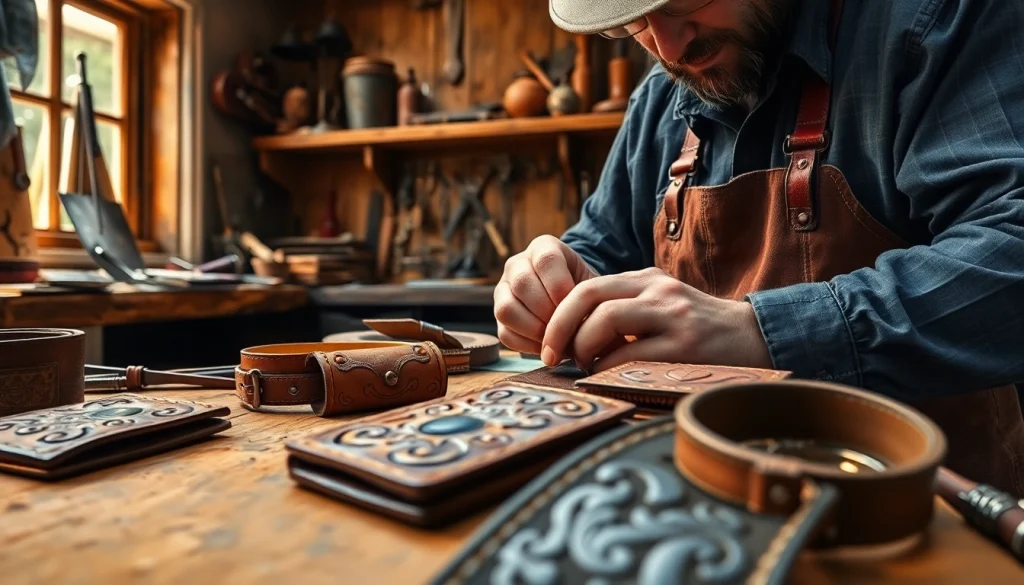

Introduction to Tooled Leather
Tooled leather is more than just a material; it is a canvas for artistry and craftsmanship that has captivated artisans and enthusiasts alike. With its rich texture and versatility, Tooled Leather represents a merging of durability and aesthetic appeal, making it a popular choice for various applications. In the following sections, we aim to explore the multifaceted aspects of tooled leather, from its beginnings to the tools required, techniques employed, and its extensive range of uses.
What is Tooled Leather?
Tooled leather is leather that has been embossed or carved with various designs using specific tools. Techniques may include stamping, rolling, or carving to create intricate patterns, images, and textures that add depth and character to the piece. The artistry involved in creating tooled leather pieces can range from simple geometric designs to elaborate scenes depicting nature, animals, or cultural motifs.
History and Significance of Tooled Leather
The art of leather tooling has a storied history, tracing back to ancient civilizations where leather was a vital material for clothing, shelters, and goods. Over millennia, various cultures developed their techniques and styles, influenced by environmental needs and artistic expression. In the Americas, Native American tribes incorporated tooling into ceremonial items, while European craftsmen sought to embellish everyday functional items, merging necessity with artistry.
Common Uses and Applications
Today, tooled leather finds its applications across multiple facets of life. The most prominent uses include:
- Fashion Accessories: Handbags, wallets, belts, and wristbands often feature tooled designs, enhancing their appeal.
- Home Décor: Tooled leather is used in items like wall hangings, book covers, and furniture upholstery.
- Horse Tack and Equipment: Saddles, bridles, and other equestrian gear frequently showcase tooled leather craftsmanship.
- Artistic Creations: Artists and makers create standalone pieces focused solely on the aesthetic beauty of tooled leather.
Tools Required for Tooled Leather
Essential Tooling Equipment
Creating stunning tooled leather pieces begins with the right set of tools. Essential equipment usually includes:
- Cutters: Used for precision cutting of the leather to required shapes and sizes.
- Bevelers: Designed to round off the edges of designs to add depth.
- Stamping Tools: Various patterns and designs can be applied using stamps that imprint the leather surface.
- Swivel Knives: Perfect for carving detailed designs and lines into the leather.
Choosing Quality Leather for Tooling
The quality of leather is paramount in tooled leather crafting. Full-grain leather is often preferred because of its durability and ability to develop a beautiful patina over time. When selecting leather, consider its thickness, texture, and ability to hold designs. Tanned leather offers versatility and varies in colors, allowing artisans to choose based on their desired outcome.
Safety Gear and Best Practices
When engaging in leather tooling, safety should not be overlooked. Recommended gear includes finger guards or protective gloves to prevent cuts, goggles to safeguard against debris, and a well-ventilated workspace to avoid inhaling fumes from dyes or adhesives. Keeping your workspace organized and ensuring tools are safely stored away when not in use are also best practices to avoid accidents.
Basic Techniques in Tooled Leather Crafting
Cutting and Shaping Leather
The first step in tooled leather crafting involves accurately cutting and shaping the leather. Start by measuring your desired dimensions and mark them carefully with a pencil. Using a sharp rotary cutter or utility knife, follow the marks to create clean edges. For intricate shapes, consider using templates or stencils to achieve uniform designs. After cutting, it’s vital to smooth any rough edges for a polished final product.
Creating Designs and Patterns
With your leather shaped, the next step is to create the designs. This can be done through sketching on the leather surface with a pencil or using tracing techniques. Draw your pattern lightly to allow for adjustments before actual tooling. Common design patterns include floral motifs, geometric patterns, or freehand drawings inspired by nature. Patience and practice are key, as refining your design skills leads to more impressive results.
Basic Tooling Techniques
Once your designs are in place, it’s time to tool the leather. Start with simple techniques like:
- Stamping: Press stamps firmly onto the leather to create patterns. Ensure even pressure and align stamps carefully for best results.
- Beveling: Use a beveler to define lines and edges, providing depth to designs. Angle the beveler slightly for a more pronounced effect.
- Carving: Carving involves using a swivel knife to etch deeper lines into the leather, adding intricate detail to your artwork.
With practice, these techniques will allow for greater creativity and mastery in your tooled leather projects.
Advanced Tooled Leather Techniques
Coloring and Finishing Options
Adding color to tooled leather can elevate a project, giving it a unique personality. Common forms of coloring include dyeing, painting, and antiquing. Dyes penetrate the leather and allow for a variety of shades, while paints provide vibrant coverage on the surface. Antiquing enhances the depth of the tooling, emphasizing intricacies, and can be achieved using products that darken the leather’s natural color while preserving its design integrity.
Complex Patterns and Embellishments
As you gain confidence in your tooling skills, explore more complex patterns and embellishments. Combining techniques allows for layered effects; for instance, embossed designs can be complemented with painting or dyeing. Consider incorporating additional materials like metal studs, beads, or additional textiles to create mixed-media designs. This not only enhances the aesthetics but also adds a tactile dimension to your leatherwork.
Maintenance and Care for Tooling
To ensure the longevity of tooled leather items, proper care is essential. Begin by cleaning the leather with a soft, damp cloth to remove dust and dirt. For maintenance, apply a leather conditioner periodically to keep the leather supple and avoid cracks. When storing, keep items away from direct sunlight and humidity to preserve their integrity. It is also wise to avoid exposure to water; if the leather gets wet, dry it slowly at room temperature without direct heat sources.
FAQs about Tooled Leather
What is the difference between Tooled and stamped leather?
Tooled leather generally refers to leather that has been carved or embossed, creating a depth of design. Stamped leather, however, typically involves applying flat designs using stamps, lacking the intricate detail of tooling.
Can I use regular leather for tooling?
While you can use regular leather, it’s best to choose vegetable-tanned leather for tooling, as it holds designs better and responds well to the carving and stamping process.
How long does Tooled Leather last?
With proper care, tooled leather can last many years. The durability comes from the quality of the leather and the craftsmanship involved in the tooling.
What are the best practices for maintaining my Tooled Leather products?
Regular cleaning with a damp cloth, periodic conditioning, and careful storage away from sunlight and humidity are essential to maintaining tooled leather’s integrity and appearance.
Is Tooled Leather suitable for outdoor use?
While tooled leather can be used outdoors, it’s crucial to treat it with waterproofing products and avoid prolonged exposure to moisture to maintain its quality and design.